



Urgent and Primary Care Centres (UPCCs) are a relatively new option for patients accessing health care in VCH. Providers from multiple clinical backgrounds (e.g., nurse practitioners, family physicians, emergency medicine physicians, and community specialists) collaborate at these centres and a need to understand role clarity has been identified as a concern.
To promote teamwork and foster a positive work culture and collegial environment, Medical Coordinator, Quality and Education for the Vancouver UPCCs Dr. Simon Moore applied for VPSA’s Small Steps, Big Idea funding. He envisioned a UPCC speaker series to address key challenges facing the clinicians who work in these facilities.
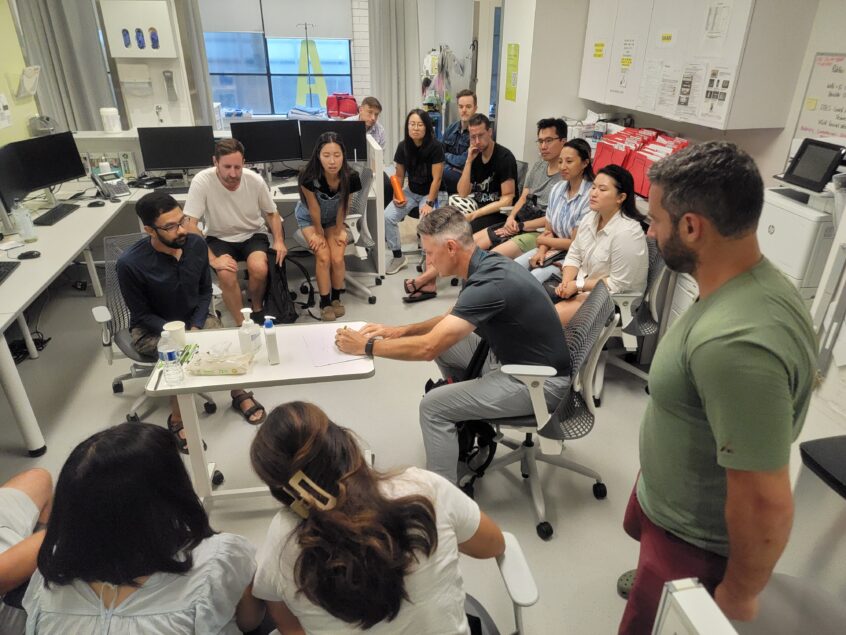
“My idea was to have 10 events where experts or specialists made presentations to the UPCC clinicians,” recalled Dr. Moore. “The goal was to improve their engagement and wellness through social connections. This would ultimately improve patient care through education.”
The speaker series successfully delivered multiple educational events across UPCC sites, covering topics such as ophthalmology, gender-affirming care, infectious diseases, ENT, early pregnancy concerns, dermatology, and gastroenterology. Topics were selected through formal and informal needs assessments, ensuring relevance to clinicians’ daily practice. VPSA funding covered the costs of the speakers’ time to prepare and make their presentations, light snacks for people attending each session, and the Mainpro+ accreditation application fee.
“Not only did clinicians have the opportunity to attend the presentations, the speakers provided copies of their slide decks to our team, virtual recordings were posted to the VCH intranet, and physicians received Mainpro+ credits,” said Dr. Moore.
The intangible results are also important.
“I’ve noticed stronger relationships among clinicians within UPCCs and between local UPCCs, as well as improved collaboration across sites and specialties,” he said. “Social connections and open dialogue have also improved.”
Dr. Moore noted some key things from this initial series.
“Clinicians valued hands-on learning and Q&A formats,” he said. “Virtual options significantly increased attendance and engagement across multiple UPCC sites, while in-person sessions led to livelier discussion and specialist interaction.”
Dr. Moore has applied for further Small Steps, Big Idea funding to expand the series. He intends to broaden the pool of speakers and topics, incorporating quality improvement elements.