



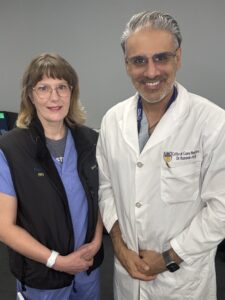
Project leads Registered Nurse Rachel Corrioni and Dr. Hussein Kanji.
To help address burnout as identified by the 2024 VCH-wide physician wellness survey, VPSA encourages members to apply for wellness funding. Critical Care physician Dr. Hussein Kanji used this opportunity to create a Joy in Work Task Force whose focus was on “pebbles not boulders” to achieve some quick wins.
“We conducted multiple engagement sessions exploring wellness, trust, and moral distress,” recalled Dr. Kanji. “We gathered anonymous input via “What Matters to You?” questions, which lead to follow-up discussions. There was great engagement with medical staff and staff and many reported feeling the sessions were transparent.”
Following the Institute for Healthcare Improvement’s Framework for Improving Joy in Work, Dr. Kanji also organized Improving Joy at Work conversations. These included wellness, gratitude, and mindset sessions. The team introduced gratitude moments and small tests of change, using emoji pulse boards and narrative reflection exercises.
“Our early improvement initiatives included some quick wins: simplified handover huddles, gratitude minutes at shift changes, and a You Said, We Did board,” said Dr. Kanji. “These have led to improved communication flow, a sense of recognition, and transparency.”
Dr. Kanji has noticed a clear link between psychological safety and communication with joy in work and that his staff and colleagues value autonomy and recognition more than broad-based wellness messaging.
“Engagement is high when conversations are framed around trust, safety, and meaning rather than wellness,” he said. “We’ve also found that quick wins matter. Making small, tangible improvements increased belief that change is possible and built momentum and credibility.”
Over the course of the funding cycle, the Joy in Work initiative within the VGH ICU progressed from an initial concept to a structured, aligned, and operationally supported program. The initial phase of the work focused heavily on relationship building, engagement and alignment across the unit and leadership structure. This was critical to the integrity and sustainability of the initiative.
“Through this process, we developed a deeper understanding of the drivers of joy and the barriers to engagement within the ICU,” added Dr. Kanji. “This phase established credibility and trust, which were essential for ongoing participation.”
Dr. Kanji also noted that a core group of champions has developed along with increasing involvement from ICU’s team-based quality improvement portfolio. With the initiative ready to transition from planning and engagement to active implementation, Dr. Kanji applied for and received additional VPSA funding. This new phase of funding is centred on the launch of a WhatsApp-based pilot designed to provide a low-barrier, real-time engagement platform for staff, enable ongoing reflection, identify small actionable improvements, and support rapid testing of changes.
Do you have an idea for a wellness initiative for your department or division? Fill out this letter of intent to see if you are eligible for VPSA funding. Funding covers physicians’ time to work on the project and participate in project activities as well as catering costs, group activities that enhance individual approaches to manage burnout symptoms or interventions aimed at organizational and work group strategies for reducing risk of burnout, hiring expertise when required, commensality groups and/or social events that meet certain requirements.